
The Phoenix Expansion From Every Corner
When a city is growing, you tend to see it in one place at a time — a new development here, a rezoning there. What's happening in Phoenix right now is different. In just the past few weeks, three significant deals have landed across different parts of the metro, involving different asset types, different players, and different visions for what this city is becoming. Taken together, they tell a story about a market where institutional capital isn't just interested — it's committing for decades.
The Core: A Blank Canvas Along the Salt River
In the heart of Phoenix, the city is making its most ambitious move in years. According to a report published this week by Connect CRE, Phoenix is firming up land-use policies for a 4,000-acre stretch along the Salt River — land that currently looks like a patchwork of service yards, gravel operations, and vacant desert. The city is identifying key development sites and actively courting investment.
Plans for the corridor include mixed-use campuses, a research hub, an ecological hotel, recreation facilities, and multifamily housing. One of the anchor sites sits near a light rail station and a future pedestrian bridge — the kind of infrastructure that turns underutilized land into a neighborhood. This isn't a single project. It's a framework for transforming a neglected stretch of the city into something that looks a lot more like a riverfront.
The East Valley: A 99-Year Bet on Industrial Demand
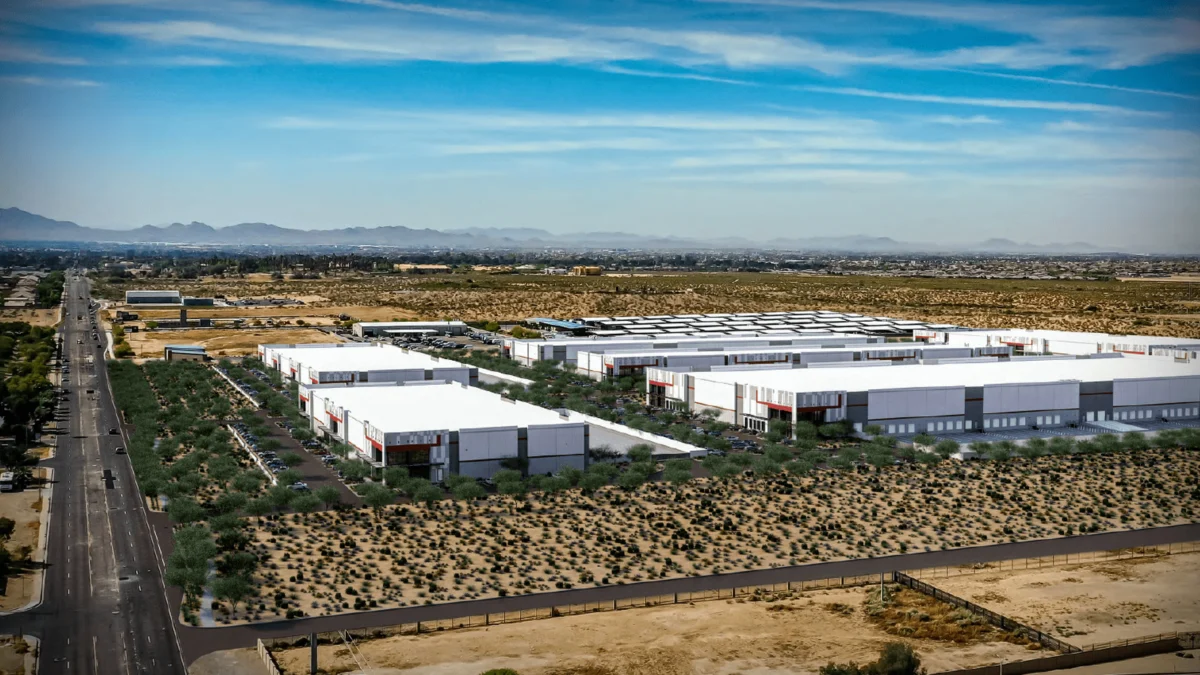
A few miles east, a different kind of long-term commitment is taking shape. Majestic Realty Co. and the Salt River Pima-Maricopa Indian Community recently agreed to a 99-year ground lease for a new Class-A light industrial campus near Talking Stick Resort. The development will feature up to eight buildings totaling nearly one million square feet, with groundbreaking anticipated in 2027.
A 99-year lease is about as long a vote of confidence as real estate gets. The project is designed to serve a broad range of tenants — from food processing and manufacturing to distribution and aerospace — positioning the East Valley as a hub for the kind of industrial activity that brings jobs, payroll, and population with it.
The West Side: $122 Million and Already Built
On the other end of the metro, institutional capital is already in the ground. Partners Group and ViaWest Group recently secured $122 million in bridge financing for The Base, a seven-building industrial campus in Glendale totaling 1.18 million square feet. Construction was completed in early 2026. The location — near Loop 303, Loop 101, and I-10 — puts Los Angeles, San Diego, and Las Vegas within a single day's drive, reaching a combined population of over 30 million. Its proximity to Luke Air Force Base also makes it a natural fit for defense contractors and aerospace suppliers.
What It Means for Multifamily Investors
Industrial development and multifamily demand aren't separate conversations — they're the same one. Every warehouse, manufacturing facility, and distribution hub that comes online brings workers. Those workers need housing. And in a metro the size of Phoenix, where growth is arriving simultaneously from the urban core, the East Valley, and the west side, the demand picture for multifamily isn't concentrated in one submarket. It's spread across the entire region.
It's also worth noting that the multifamily components tied to projects like the Salt River corridor are years away from delivering — most won't hit the market for three to five years. That means the current supply-demand dynamic, where demand has already outpaced available inventory, isn't being disrupted anytime soon. The new housing being planned reflects long-term confidence in Phoenix's growth, but it doesn't change what the market looks like today for investors looking to get in now.
That's the kind of environment that sustains a residential market over time — not a single catalyst, but a diversified base of economic activity building from every direction at once, with demand running ahead of supply for the foreseeable future.
About the author
Neighborhood Ventures